
For years most Lutheran congregations used only purple for Lent and Holy Week. That began to change in 1981 when two new colors were introduced with the revised lectionary: blue for Advent and scarlet for Passion Sunday and Holy Week.
Thanks to a generous donation in memory of Harold Hain, we recently acquired a set of scarlet paraments and dedicated them this past Sunday.
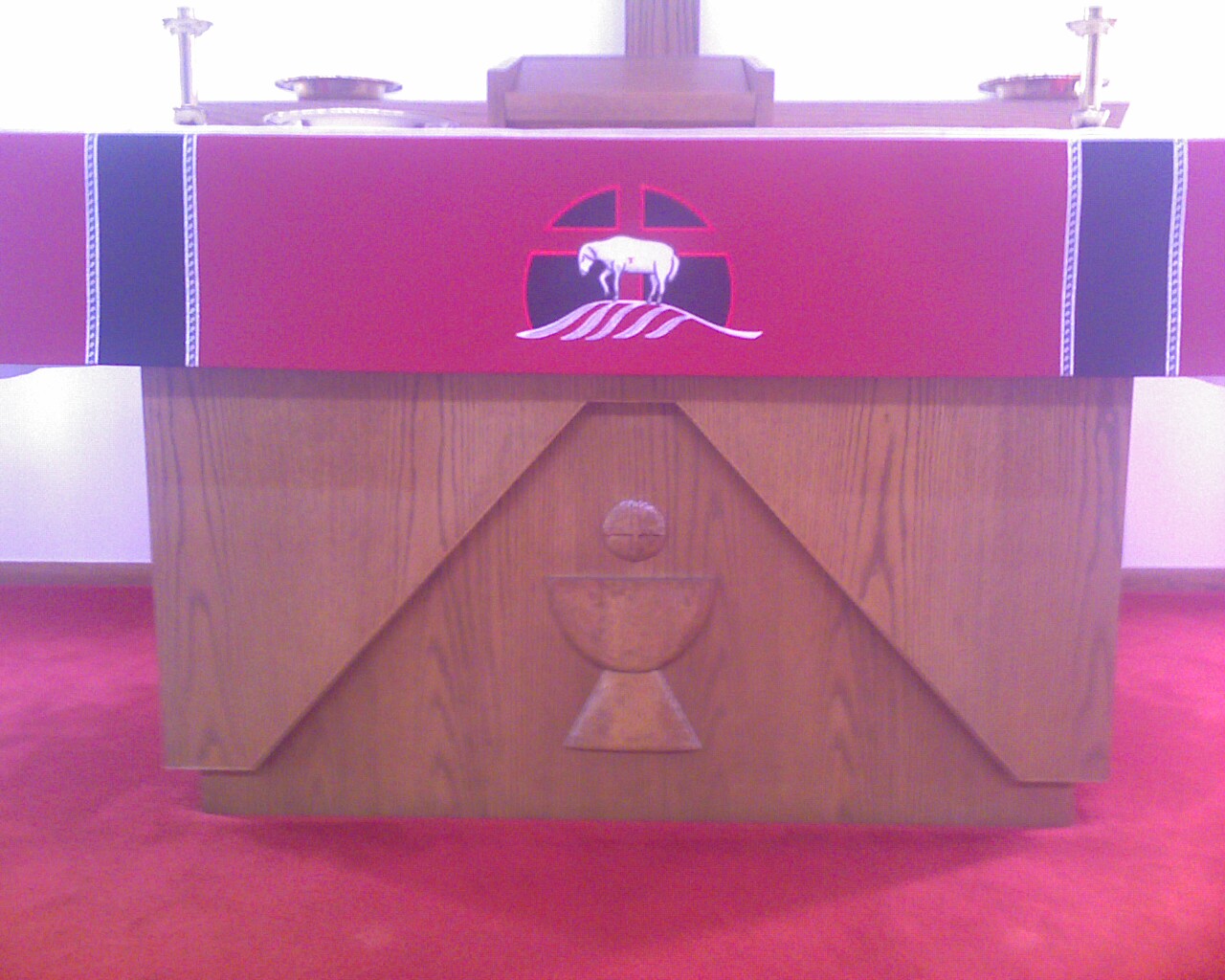
This is a picture of the superfrontal. The lamb with a gash in its side is a traditional symbol of Christ who is the “Lamb of God who takes away the sin of the world.” The lamb is standing on a palm branch as a reminder of Christ’s entry into Jerusalem on Palm Sunday. The lamb appears sad, because he knows he will soon die for the sins of the people. The black bars and blood-red cross are also reminders of Christ’s death.
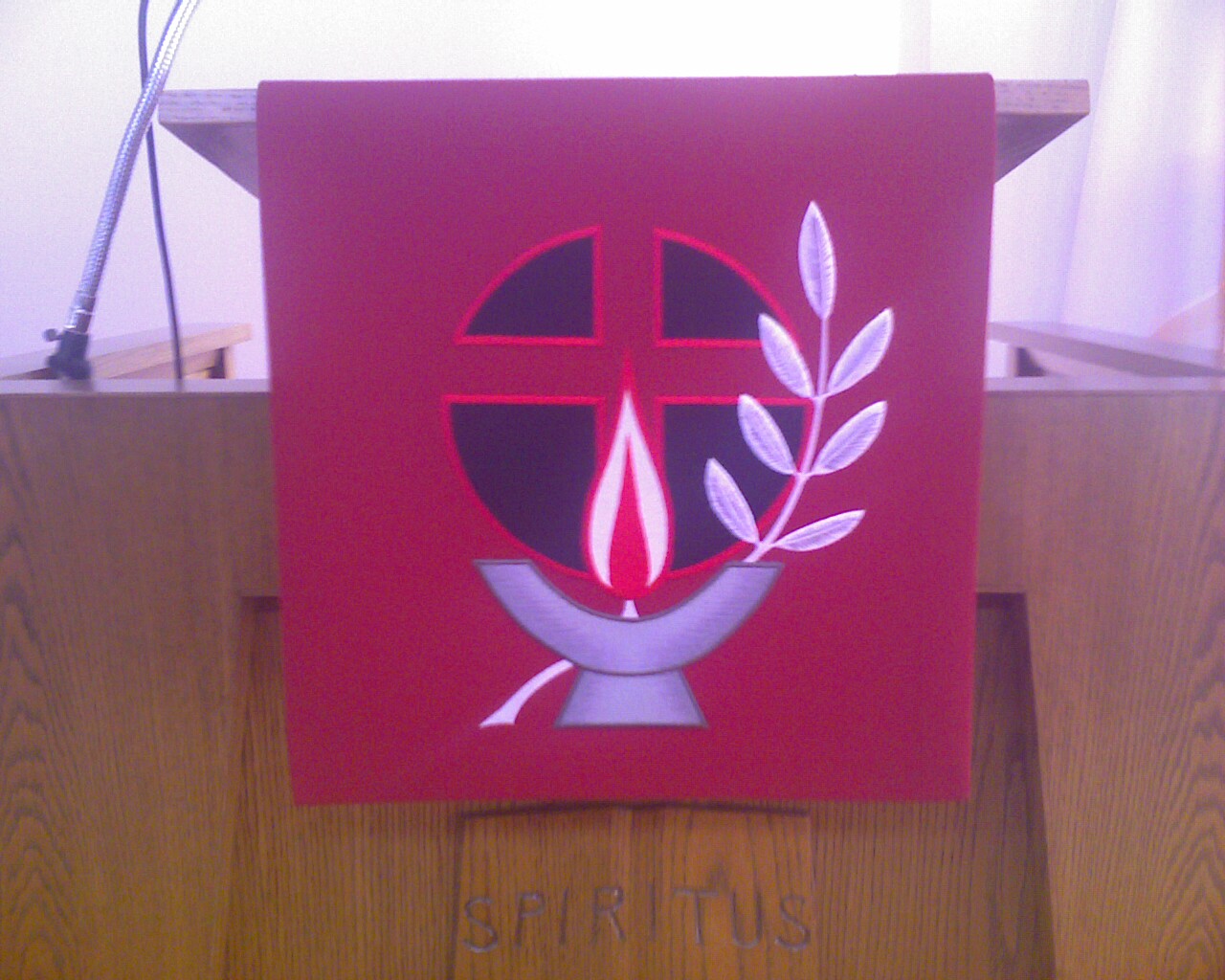
The pulpit is adorned with this antependium. The lamp is a traditional symbol for the Word of God. The leafy branch a symbol of new life.
These exquisitely embroidered paraments were made for us by the Gaspard company.
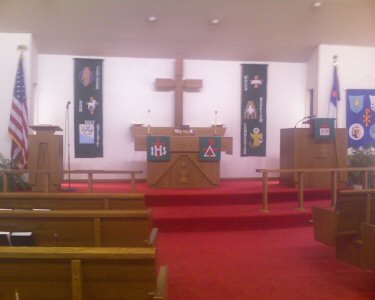
 The open hand for the Father comes from Psalm 145:16, “You open your hand and satisfy the desires of every living thing.” The circle around the hand is a symbol of God’s eternal being, without beginning or end.
 The use of a lamb to represent Christ dates to John the Baptist, who pointed Jesus out as “the lamb of God who takes away the sin of the world” (John 1:29). He stands in front of a cross as a reminder that he had to die to take away our sin.
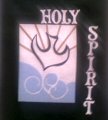 The Spirit is represented by a dove because he took that form at Jesus’ baptism.
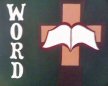 The Word of God is represented by an open book. The cross behind the book reminds us that the entire Bible speaks of Christ.
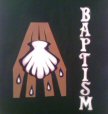 The shell with water dripping from it represents baptism, which is often done by pouring water over the one who is being baptized.
 The cup, wafer, and stalk of wheat, represent the Lord’s Supper or Holy Communion. The cross on the wafer is a reminded that we receive Christ’s body and blood in the sacrament along with the bread (the stalk of wheat) and wine.
 St. Paul Lutheran